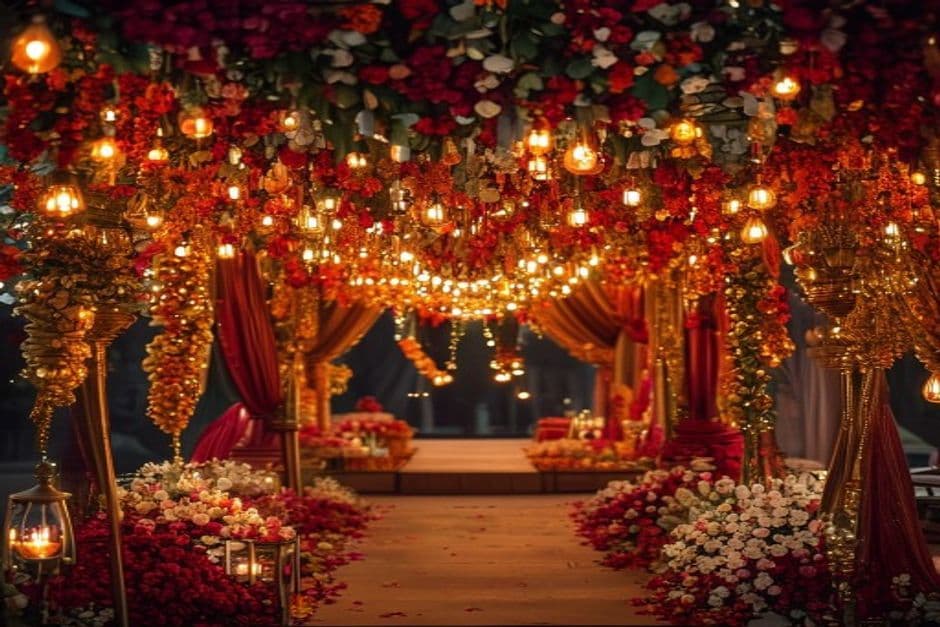
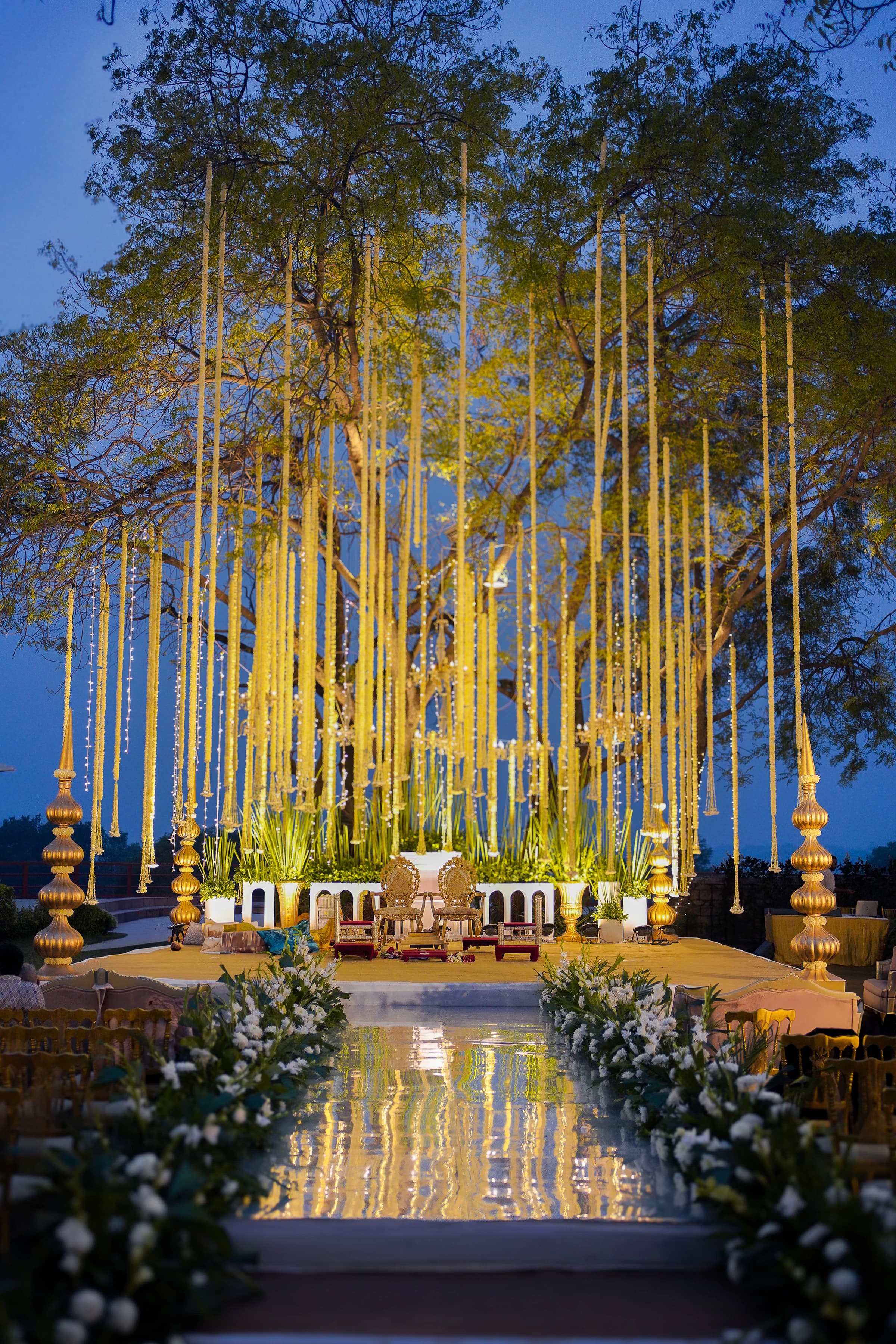
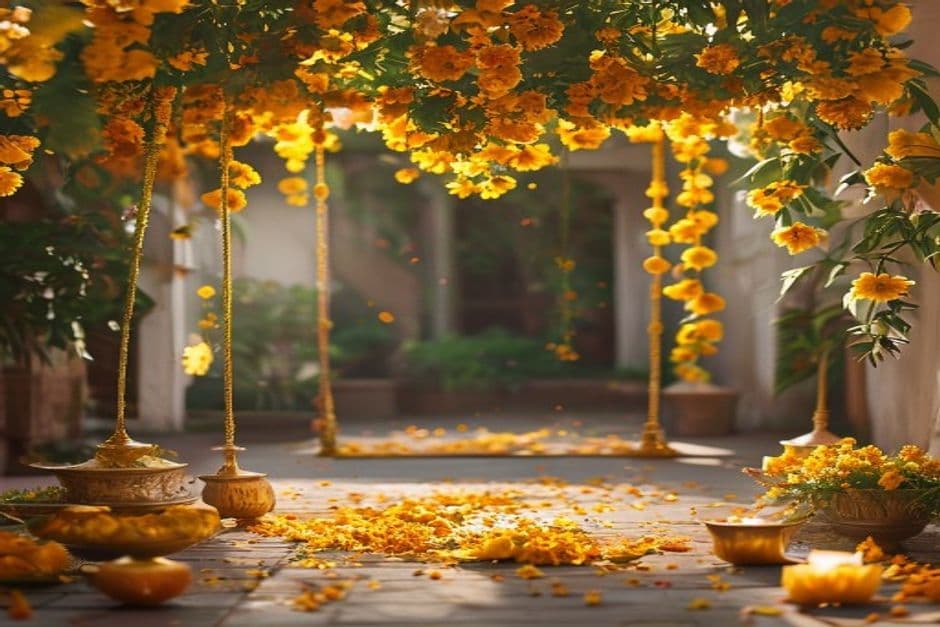
There is a moment, perhaps an hour before the first guest is due, when a wedding room stops feeling like a project and starts feeling like a place. The drape has settled; the marigolds have opened a little wider than they did at noon; the filament bulbs are warming up and that one corner finally looks the way the mood board promised it would. TODO: A curated guide to Siliguri venues by guest count, with notes on logistics, light, and the kind of weddings each one suits.
Most of our briefs arrive as an idea and a Pinterest board. We read both carefully, then put them aside. What we keep is the feeling — the photograph the family does not yet have but already wants to frame. Then we work backwards: how does the room have to feel for that photograph to be possible? Which wall? Which light? Which silhouette of jasmine, against which wall, at which hour?
“A photograph that grandparents can frame is the only brief we accept.”
The light first
Light is the only element that touches every other element. If the light is wrong, the marigolds will look orange-plastic, the brass will look yellow, and the bride’s benarasi will look like a costume. So we begin every plan with a single question: at what hour does the room have to be its best, and what is the colour temperature of the light at that hour?
For a haldi at ten in the morning, the answer is easy — let the sun do the work, and add nothing warmer than 3000K to fill the shadows. For a Bengali wedding at nine in the evening, the answer is harder: the room must feel candle-lit even though we cannot use only candles, so we build a layered base of warm tungsten and let small accents (the diyas, the strands of filament bulbs along the mandap pillars) carry the romance.
The room follows
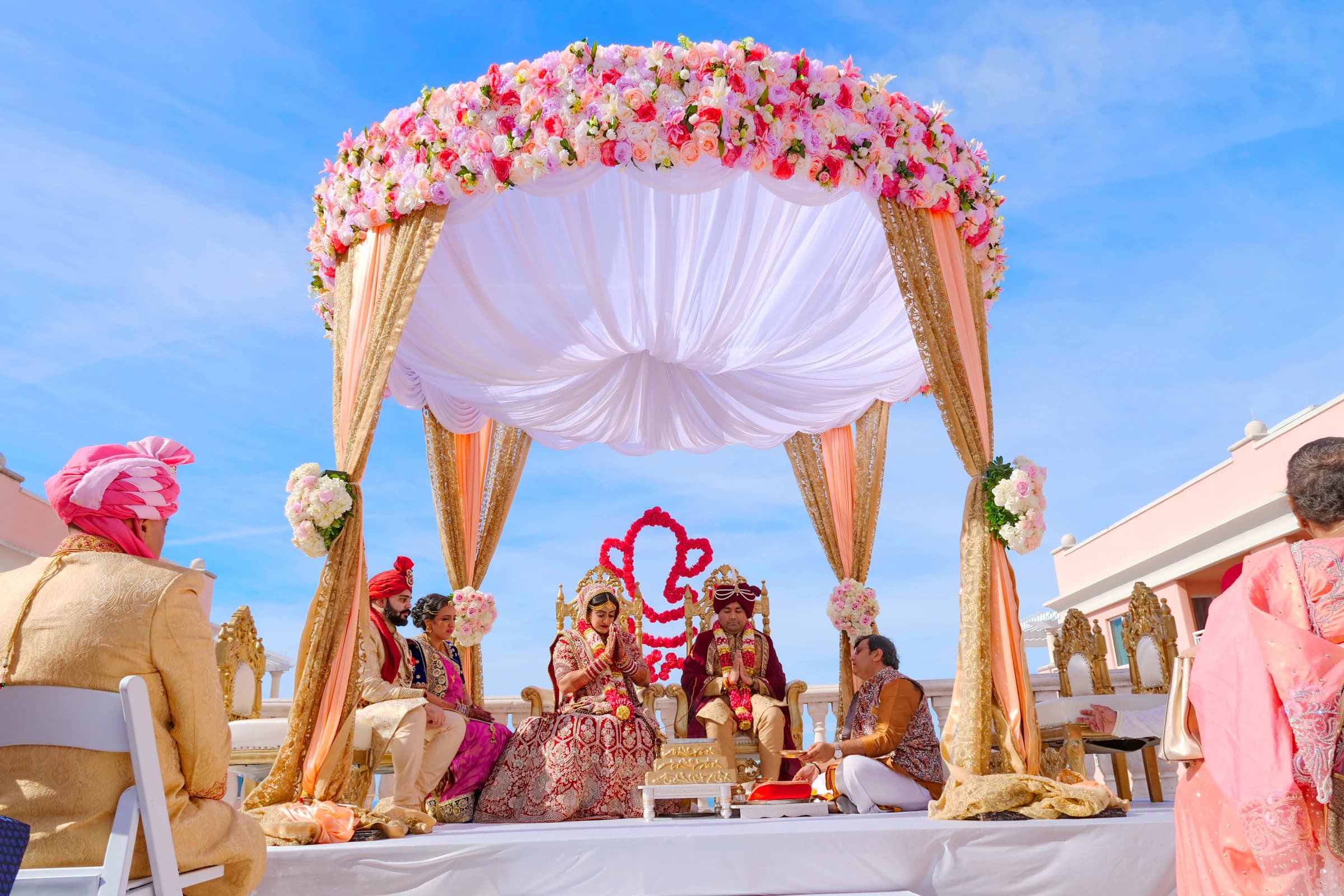
Once the light has been decided, the room arranges itself. The mandap goes where the light is most generous; the seating fans out from the mandap so every guest has at least one moment of eye-contact with the couple; the floral spill points back to the mandap so the camera always returns home. The drape, the florals, the candles, the brass — they are all in service of the same axis.
We learnt this the hard way at a Dooars wedding in 2024. Beautiful drape, beautiful florals, an utterly ordinary axis. The photographs were good. They were never going to be great. Since then we draw the axis first, on paper, before we draw anything else.
Three habits
Three small habits that have outlasted every trend we have watched come and go:
- Leave the room emptier than the brief asks for. Negative space is luxury; clutter is fear.
- Use one flower in three sizes. A garland, a centrepiece, a single bloom at every place setting — the eye reads it as intention, not coincidence.
- Light the floor, not just the ceiling. The face that is lit from above looks tired; the face that has a soft warmth rising from the floor looks loved.
Everything else is a variable. These three are the constants we have kept since the studio’s first event, and they are the closest thing we have to a method.